How to Choose the Right Marble for Your Piece
By Aman Khan · October 2026 · 3 min read
White or dark, polished or honed? A practical guide to choosing marble for tables, trays, bathroom sets and decor, and to living with it happily for years.
Choosing marble is part science, part instinct. You want a stone you love the look of, but also one that suits how the piece will be used. This guide walks through the stones we work with, the finishes, and the questions worth asking before you decide.
First, how marble behaves
Marble is a natural stone made mostly of calcium carbonate. That gives it its depth and glow, but it also means acids such as lemon juice, vinegar and wine can etch a polished surface, leaving a dull mark. Sealing helps protect against stains, but it cannot fully prevent etching. Many people come to love the soft patina marble develops over the years; others prefer to choose a finish that keeps it looking new for longer.
The practical takeaway is simple: the more a piece will meet food and drink, the more the finish matters.
Polished or honed?
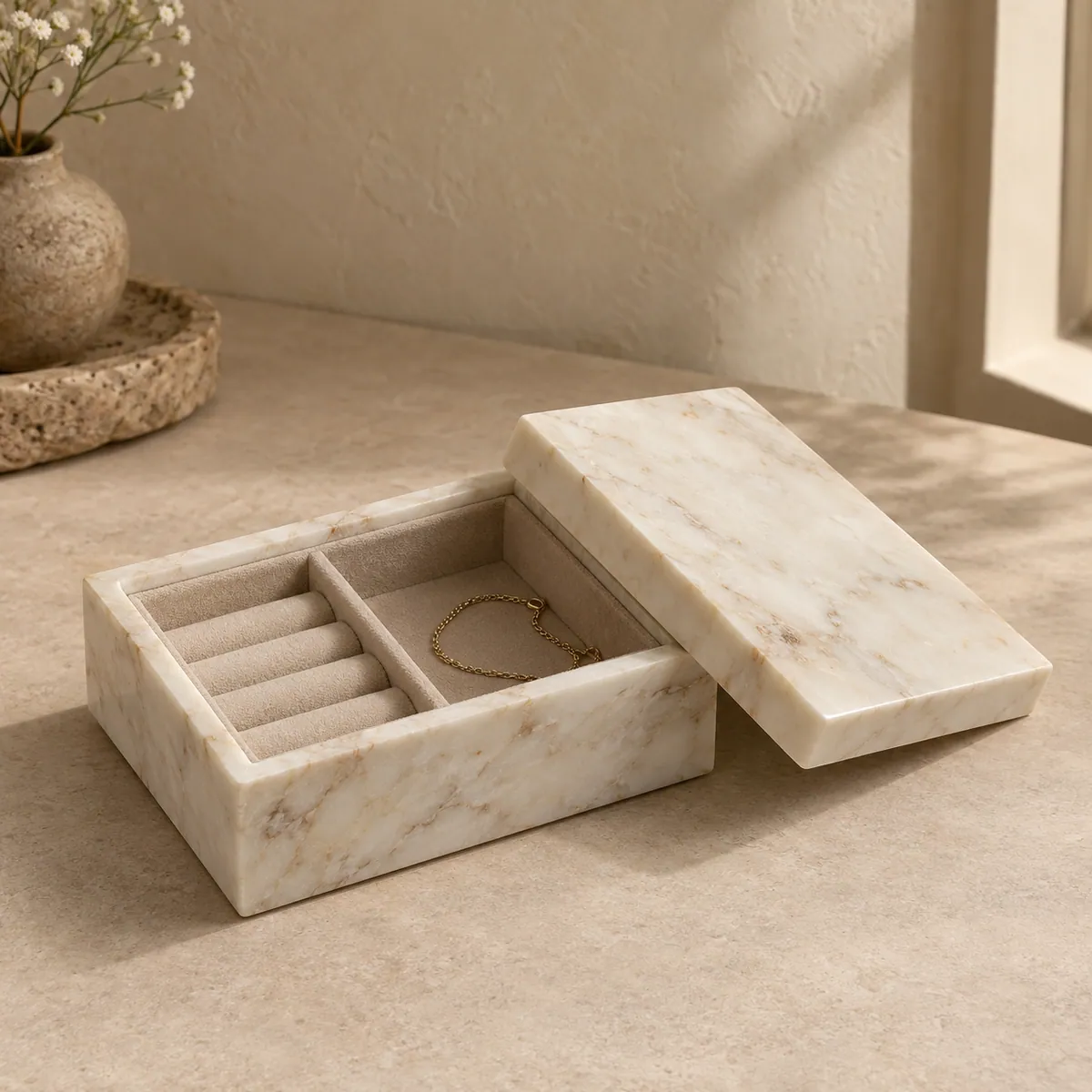
A polished finish is glossy and reflective. It deepens the colour and makes the veining stand out, which is ideal for vases, lamps, boxes and sculptures. A honed finish is smooth and matte. It shows etching and fingerprints far less, which makes it the better choice for dining tables, coffee tables and serving boards in daily use.
The stones, compared
- Carrara White, from Tuscany: soft white with fine grey veining. Classic, versatile and the most familiar Italian white.
- Statuario, from the Carrara region: a brighter white with sharper, darker veins. Crisp and architectural, and the classic sculptor's marble.
- Calacatta Gold, from the Apuan Alps: bright white with dramatic gold and amber veining. A statement stone for tables and centrepieces.
- Makrana White, from Rajasthan: the stone of the Taj Mahal. Dense, luminous and calm, and well suited to carved and sculptural work.
- Nero Marquina, from northern Spain: deep black with bright white veins. Striking with brass and gold, and best honed where it will meet food and drink.
- Verde Guatemala: a rich forest green with pale veining. Strictly a serpentine rather than a true marble, it is traded as green marble and brings real depth to a room.
- Travertine Beige, from Tivoli: warm and textural, with natural pores that are usually filled for a smoother surface. Relaxed and earthy.
- Onyx Honey: translucent honey-amber that glows when light passes through it. More delicate and brittle than marble, so it is best for decorative pieces rather than hard-working surfaces.
Choose the stone with your eyes, and the finish with your daily life in mind.
Matching the marble to the piece
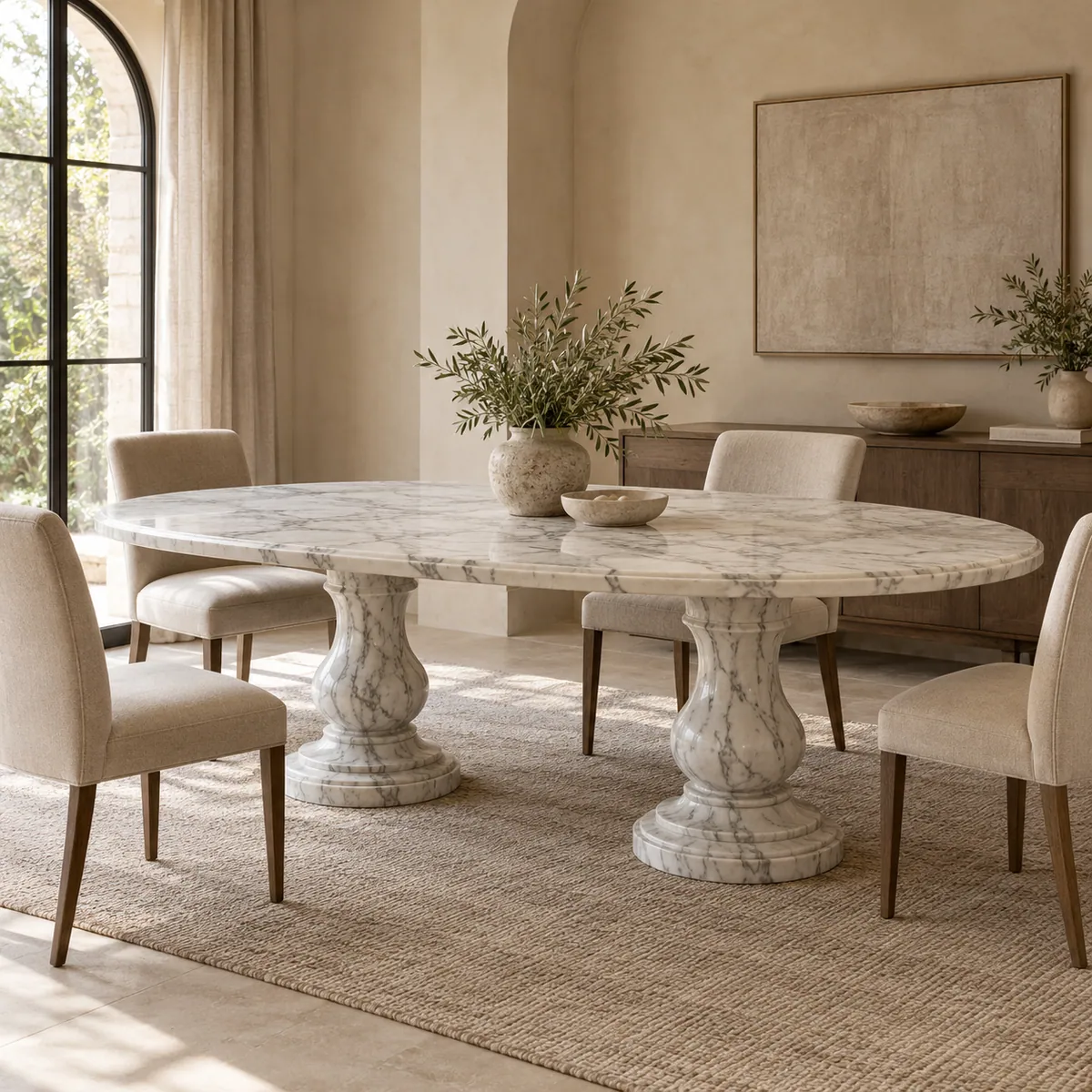
- Dining and coffee tables: a honed finish. Lighter stones with plenty of veining are the most forgiving, because etch marks show most on dark, highly polished surfaces.
- Serving boards and trays: honed or lightly polished, and wiped clean soon after use.
- Bathroom sets: almost any marble works. Rinse away soap residue and avoid harsh cleaners.
- Vases, lamps and decor: choose freely, and let a polished finish make the most of the veining.
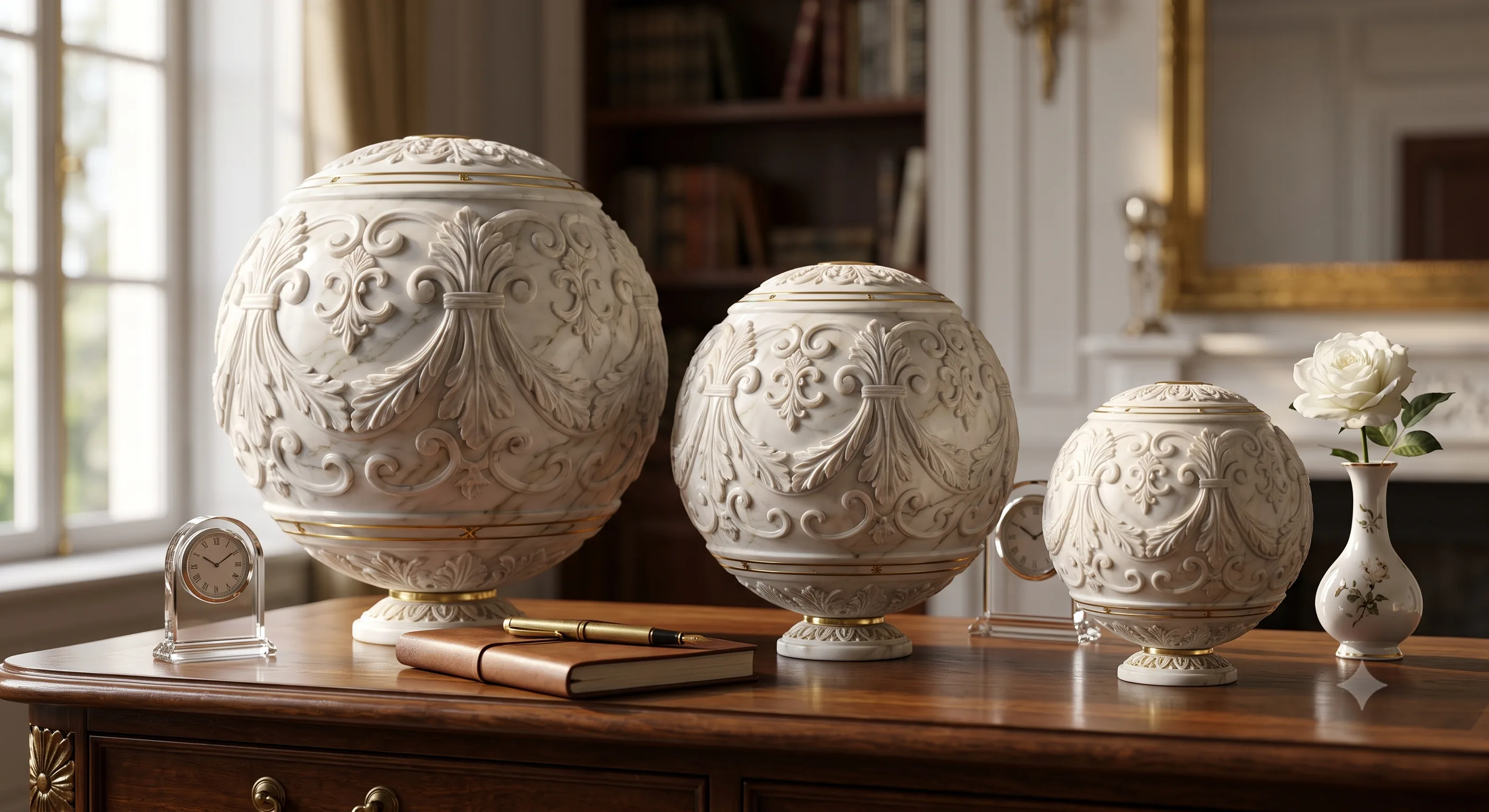
- Statement and sculptural pieces: dense stones such as Makrana White and Statuario hold fine carved detail beautifully.
Caring for marble
- Wipe up spills quickly, especially acidic ones such as citrus, wine and vinegar
- Use coasters and trays under glasses and bottles
- Clean with a mild, pH-neutral soap and water
- Avoid abrasive pads and harsh or acidic cleaners
- Reseal pieces in daily use, typically once a year
Still deciding? Tell us what the piece is for and where it will go, and we will suggest stones and finishes that suit it. Where your design needs it, you will see a photo of the stone before carving begins.
Have a piece in mind? Start a custom order, see how it works or browse the collection.